

561-721-7999
FREE ONSITE QUOTE!

4.9/ 5 Ratings based on 1698 reviews
GREAT SERVICE, GREAT REVIEWS!

Call This Thursday to Get
$35 OFF
of any service
561-721-7999
4.9/ 5 Ratings based on 1698 reviews
Call This Thursday to Get
of any service
 Mar 16,2026
 Digging up ground to access underground utilities has always come with risks, like damaged lines, injured workers, and torn-up property that takes weeks to restore. Hydro excavation tunneling has changed that equation in a serious way, and the construction and utility industries have taken notice. Trust Rooter uses this method because the results speak for themselves in terms of safety, precision, and the condition of a job site when the work is done. Keep reading to understand exactly how hydro excavation works, why it outperforms conventional digging, and when it makes the most sense to use it.
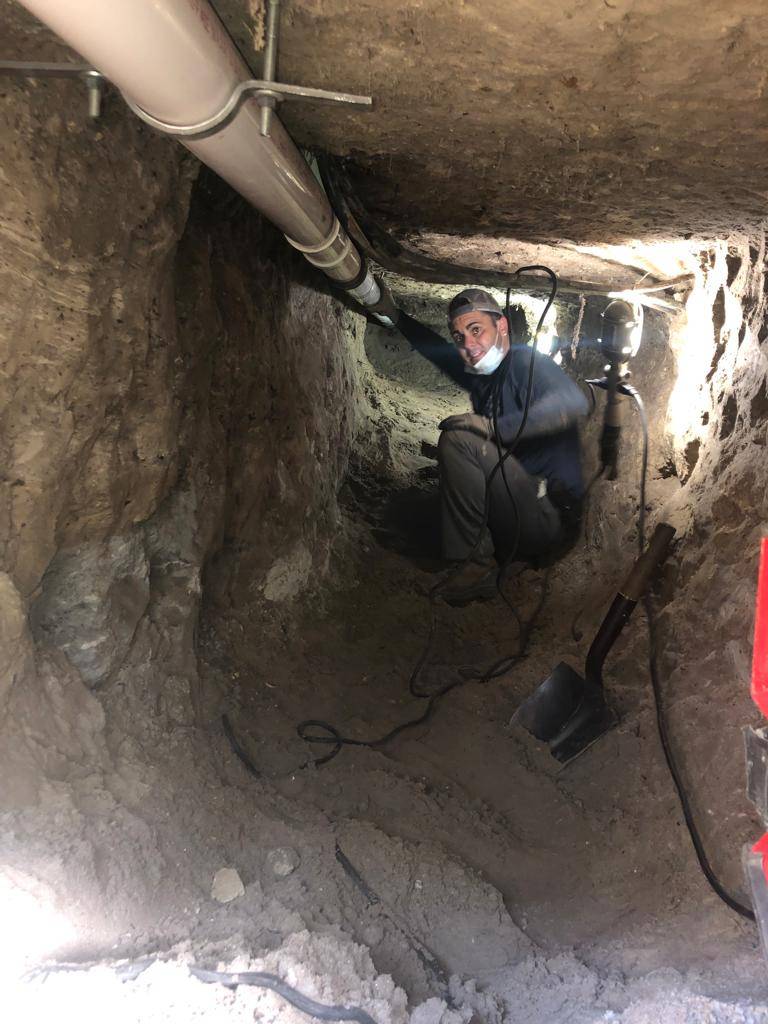
Hydro excavation tunneling uses pressurized water to break up the soil and a high-powered vacuum to remove the resulting slurry from the excavation zone. The water cuts through the ground precisely where the operator directs it, and the debris gets pulled into a holding tank mounted on a truck nearby. Nothing mechanical enters the ground. There's no backhoe bucket, drill bit, or auger.
The equipment normally delivers water at pressures between 1,000 and 3,000 PSI, which is enough to displace compacted soil, clay, and gravel without applying force to whatever lies beneath. A trusted plumber working on buried pipe access relies on this precision because the line between exposing a pipe and rupturing it can be a matter of inches. The vacuum component handles removal fast enough that workers aren't waiting for manual cleanup between passes.
The combination of cutting and extraction gives operators control that mechanical digging can't match. The process works vertically or at an angle, which is what makes tunneling possible in areas where a straight-down approach would hit infrastructure on the way in.
Conventional excavation uses mechanical equipment to move earth with backhoes, trenchers, and hydraulic breakers that apply broad force to a dig zone. It doesn't discriminate between soil and a gas line buried six inches off-target on a utility map. The U.S. Department of Transportation reports that underground utility strikes happen hundreds of thousands of times each year, and mechanical digging accounts for a major share of those incidents.
The risks compound quickly once a line gets hit. A ruptured gas main creates immediate explosion and inhalation hazards. A severed electrical conduit puts workers in danger and can knock out service to entire neighborhoods. Even a broken water main generates enough pressure to injure workers standing nearby and turns a manageable dig site into a flooded excavation.
Conventional methods also require workers to enter trenches that can collapse. OSHA considers trench collapse one of the leading causes of construction fatalities. Cave-ins happen without warning and bury workers faster than rescue crews can respond.
Pressurized water does the work that a mechanical blade would otherwise handle, but with a controlled footprint. The operator holds a handheld wand or a mounted nozzle and directs the stream into the soil. The water loosens and displaces material in a contained area, and the vacuum pulls it out. The result is a defined excavation with walls that stay where they should.
It eliminates the vibration that mechanical equipment transfers through the ground. Vibration is a real problem near older infrastructure. Cast iron pipe, clay sewer lines, and aging conduit can crack under repeated mechanical stress, even when the equipment never makes direct contact. A plumbing repair service working near vintage infrastructure avoids the risk with hydro excavation because water pressure doesn't transmit seismic force through the soil.
The vacuum system also removes the excavated material completely from the site. It goes into the debris tank on the truck. Workers aren't moving spoil piles by hand or repositioning them with loaders, which reduces secondary equipment on-site and the hazards that come with it.
Workers using hydro excavation don't enter the excavation during the digging phase. The equipment operates from the surface. That single factor eliminates the trench collapse risk. The absence of mechanical cutting equipment also removes the hazard of blade contact and thrown debris. Excavators and trenchers kick up rocks, broken pipe fragments, and compressed soil at speeds that cause serious injuries. The hydro excavation process keeps workers behind the equipment rather than adjacent to an active cutting zone.
There's also a chemical exposure consideration. When mechanical equipment ruptures a utility line carrying gas, fuel, or industrial materials, the crew at the dig site absorbs the initial exposure. With hydro excavation, the controlled approach reduces strike probability dramatically, which means the likelihood of a sudden chemical release drops with it.
Hydro excavation tunneling performs best in dense utility corridors, urban job sites, and projects where multiple buried systems run in close proximity. Daylighting, which is the process of exposing a buried utility for visual inspection or repair, is one of the most common applications. A trusted plumber locating a specific section of water main in a congested area can expose exactly what's needed without disturbing adjacent lines.
Potholing, slot trenching, and remote excavation in areas inaccessible to heavy equipment also favor this method. The vacuum truck can sit at a distance from the dig zone, with an extended hose reaching the site. That matters in tight urban corridors, around bridge abutments, or beneath active roadways where a conventional excavator can't position itself safely.
Cold-weather projects benefit from the heated water capability that some hydro excavation units carry. Frozen ground that would require mechanical breaking can be thawed and excavated in the same pass, which keeps project timelines intact without adding extra equipment or labor.
Mechanical excavation leaves spoil piles, disturbed surface material, and a wide footprint that requires grading, compaction, and re-sodding or repaving. A job that takes two days to dig can take a week to restore to pre-construction condition. Property owners deal with mud, equipment ruts, and disrupted landscaping throughout that window.
Hydro excavation removes the spoil from the site. The debris tank carries it away when the truck leaves. The excavated area is precise in width and depth, so the surrounding ground stays intact. Backfilling a hydro excavation takes less material and less time because the hole matches what the job requires.
For a plumbing repair service working in a residential area, the difference is visible immediately. Grass, pavement, and landscaping survive the process in a condition closer to what existed before the dig started. It reduces restoration costs, shortens the time a homeowner or business owner deals with disruption, and eliminates the disputes that arise when a contractor leaves a property in worse shape than they found it.
If you’re ready to protect your property and get the job done right, don’t wait. Contact Trust Rooter today. Our friendly staff can answer questions or schedule hydro excavation tunneling for your next project.
Trust Rooter is a professional plumbing company that has built a reputation for offering reliable residential and commercial plumbing services. From drain cleaning to water heater maintenance, garbage disposal repair, water leak repair, faucet repair, and sewer drain repair, Trust Rooter is your go-to plumbing company for all of your plumbing needs.
When South Florida gets hit with heavy rain, the effects aren't always limited to flooded streets and soggy yards. Saturated soil and already-high groundwater can put extra stress on underground plumbing, while damaged sewer…
 Read More
Does your home have a sewer smell that nobody can trace? A plumbing smoke test can quickly find where it starts. Trust Rooter is here to help. Sewer gas escapes through openings too…
Read More 
A row of broken urinals in a busy restroom invites customer complaints, health inspection problems, and high water bills. Waiting until something breaks could mean shutting down fixtures during peak hours. Trust Rooter recommends…
Read More