

561-721-7999
FREE ONSITE QUOTE!

4.9/ 5 Ratings based on 1698 reviews
GREAT SERVICE, GREAT REVIEWS!

Call This Thursday to Get
$35 OFF
of any service
561-721-7999
4.9/ 5 Ratings based on 1698 reviews
Call This Thursday to Get
of any service
 Feb 28,2026
 A bad smell coming from your yard is easy to dismiss the first time you notice it, but when it keeps coming back or gets stronger after rain, something underground is almost certainly to blame. Sewer odor doesn't linger on the surface without a reason, and a broken sewer line is at the top of the list of causes worth ruling out. Trust Rooter has tracked down enough of these problems to know that waiting on this particular issue rarely works in a homeowner's favor. Read through this, and you'll understand what a broken sewer line looks like, how it gets diagnosed, and what the repair process involves.
The smell you're noticing is hydrogen sulfide gas, the byproduct of decomposing organic waste inside a sewer pipe. When the pipe is intact, the gas stays contained and routes out through your home's vent stack. When there's a crack or break underground, the gas escapes into the soil and works its way up to the surface.
Rain accelerates the process because water pressure shifts the soil and temporarily widens small cracks. It also pushes gas up through the ground faster than in dry conditions. That's why homeowners notice the smell most after a storm, then assume it's gone when it fades a few days later.
The odor itself could be a symptom of active waste leakage. If raw sewage is saturating the soil around the break, it creates health risks for anyone using that part of the yard and can contaminate groundwater if the leak continues unchecked.
Most residential sewer lines run between 4 and 6 inches in diameter and sit 2 to 6 feet underground. Several specific conditions cause them to fail.
The break usually doesn't happen all at once. It starts with a hairline crack that lets roots in or allows small amounts of leakage, then worsens progressively over months or years. By the time you smell it in the yard, the damage is already well past the early stage.
Smell isn't always the first sign. Some homeowners notice the yard before they notice any odor, and the visual clues are specific enough to take seriously.
A patch of grass that's noticeably greener and growing faster than the surrounding lawn is a common indicator. Sewage acts as a fertilizer, and leaking waste feeds a concentrated area of the yard while the rest stays uniform. Soft or spongy ground in a specific spot, especially over the sewer line's path from the house to the street, points to soil saturation from below.
Sinkholes or depressions forming gradually in the yard are a more urgent sign. These develop when soil erodes into the pipe through the break and leaves a void underground. If you see a depression forming, don't let people or pets walk through that area until a plumber in Lantana evaluates it. The ground above a pipe collapse can be unstable enough to give way.
Locating a sewer break used to require digging up a large portion of the yard to find the problem. That's no longer the standard approach. Most plumbing repair services now use camera inspection as the first diagnostic step.
A technician feeds a waterproof camera on a flexible cable directly into the sewer line through a cleanout access point. The camera transmits live footage to a monitor and records the interior of the pipe as it moves through. Cracks, root intrusion, collapsed sections, and misaligned joints all show up clearly on the footage. The technician also notes the footage's timestamp and footage depth to pinpoint the exact location underground.
Once the camera identifies the problem's location, a sewer repair service uses ground-penetrating radar or electronic pipe locators to mark the spot on the surface. This limits any necessary digging to a targeted area rather than a full trench. In many cases, the camera footage alone determines which repair method is appropriate, so the diagnostic step directly informs the work plan.
The repair method depends on the type and extent of the damage the camera inspection reveals. There are two primary approaches used in residential work. Trenchless pipe lining works when the pipe is cracked or has moderate root damage, but still holds its basic shape. A technician inserts a resin-saturated liner into the existing pipe and inflates it against the walls. The resin cures in place and creates a new pipe surface inside the old one. This method preserves your yard, costs less than full excavation, and adds 25 to 50 years of service life to the repaired section.
Pipe bursting applies when the existing pipe is too deteriorated for lining. A technician pulls a bursting head through the old pipe, which fractures it outward while simultaneously pulling a new pipe into position behind it. This also avoids a full excavation but does require access points at each end of the replaced section. Traditional open-cut excavation remains necessary for full collapses or situations where the pipe has shifted so severely that trenchless tools can't get through it. A qualified plumber will recommend the method that fits the condition of the pipe rather than defaulting to the most expensive option.
Hydrogen sulfide exposure, soil contamination, and structural ground failure all get worse the longer a broken sewer line stays unrepaired. Schedule a camera inspection at the first sign of odor, soft ground, or unusual grass growth. It gives you a clear picture of what's broken, where it is, and what plumbing repair service is required. Trust Rooter provides camera inspections, trenchless repairs, and full sewer repair services for local properties. If your yard is telling you something's wrong underground, we'll confirm it and fix it.
Trust Rooter is a professional plumbing company that has built a reputation for offering reliable residential and commercial plumbing services. From drain cleaning to water heater maintenance, garbage disposal repair, water leak repair, faucet repair, and sewer drain repair, Trust Rooter is your go-to plumbing company for all of your plumbing needs.
When South Florida gets hit with heavy rain, the effects aren't always limited to flooded streets and soggy yards. Saturated soil and already-high groundwater can put extra stress on underground plumbing, while damaged sewer…
 Read More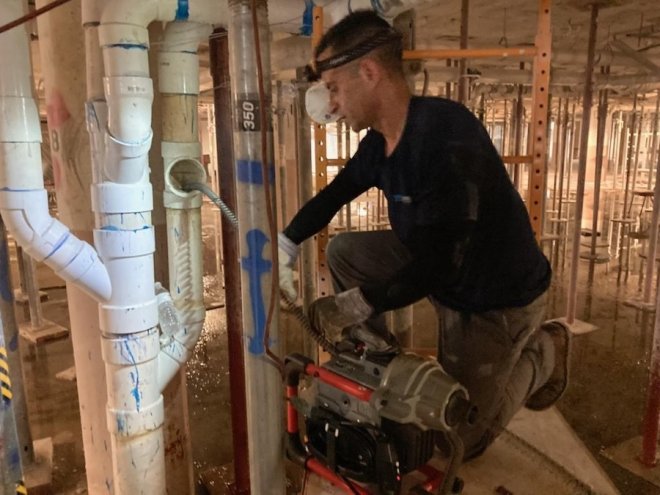
Does your home have a sewer smell that nobody can trace? A plumbing smoke test can quickly find where it starts. Trust Rooter is here to help. Sewer gas escapes through openings too…
Read More 
A row of broken urinals in a busy restroom invites customer complaints, health inspection problems, and high water bills. Waiting until something breaks could mean shutting down fixtures during peak hours. Trust Rooter recommends…
Read More