

954-707-6556
FREE ONSITE QUOTE!

4.9/ 5 Ratings based on 1698 reviews
GREAT SERVICE, GREAT REVIEWS!

Call This Thursday to Get
$35 OFF
of any service
954-707-6556
4.9/ 5 Ratings based on 1698 reviews
Call This Thursday to Get
of any service
 Jul 30,2026
 Ever hear your toilet flush by itself in the middle of the night with nobody in the bathroom? Phantom flushing is caused by water slowly leaking from the tank into the bowl. Once the tank drops below a certain level, the fill valve kicks on to refill it. The flush sound is the tank topping itself off. The culprit is almost always a worn flapper or a fill valve past its lifespan. Trust Rooter offers toilet repair service for phantom flushing and other silent leaks that drive up water bills. Keep reading to learn what causes ghost flushing, how to identify the failing part, and which repairs will stop the problem.
Ghost flushing sounds spooky, but the mechanics behind it are boring. Your toilet tank holds water at a set level, held back by a rubber flapper sitting on the flush valve opening. When that seal breaks down, water sneaks past it into the bowl. The tank level drops, a float sinks with it, and the fill valve opens to refill the tank. The refill is the "flush" you hear at 2 a.m.
The leak can be tiny. A pinhole gap under the flapper might only pass a few ounces per minute, which explains why you never see water running into the bowl. But the fill valve doesn't care how slow the leak is. Once the water level drops enough to trigger the float, it activates. Some toilets refill every 20 minutes. Others go hours between cycles, then run for 15 seconds and shut off. A single phantom-flushing toilet can waste 200 gallons of water per day. Most homeowners don't catch it until they call a professional plumber in Palm Beach County about a mysterious water usage spike.
The flapper is the rubber disc at the bottom of your tank that lifts when you push the handle. It's the number one cause of phantom flushing, and it fails for the following reasons:
Most flappers last three to five years in normal conditions. Drop tablets or hard water can cut that down to just a few years. Run your finger along the underside of an old flapper, and you'll notice black residue coming off on your skin. That's the rubber breaking down, and it means the seal is compromised.
Swapping a flapper takes about ten minutes and costs under $10 at any hardware store. But matching the right flapper to your toilet model is important. A universal flapper works on many brands, but low-flow toilets and dual-flush models need specific replacements. Bring the old one to the store to compare.
If you've replaced the flapper and the phantom flushing continues, the fill valve is the next suspect. This is the tall plastic assembly on the left side of the tank that refills water after each flush. When it fails, it either runs at a trickle constantly or cycles on and off without any flushing. A worn fill valve usually gives you these warning signs:
Sediment in your water supply wears out the internal seals in the fill valve. Hard water speeds this up dramatically. Most fill valves last five to seven years, though a plumbing repair service in an area with aggressive water chemistry might replace them sooner.
Before you buy any parts, run the dye test to confirm which piece is failing. Drop 10 to 15 drops of dark food coloring into the tank. Skip the flush and wait 20 minutes. Check the bowl. If colored water appears in the bowl without flushing, your flapper is leaking.
If the bowl stays clear but the toilet still cycles on its own, the fill valve is leaking internally or set incorrectly. Lift the tank lid and watch the water level for a few minutes. Water rising above the overflow tube marking, or trickling into the overflow tube itself, points to a fill valve replacement.
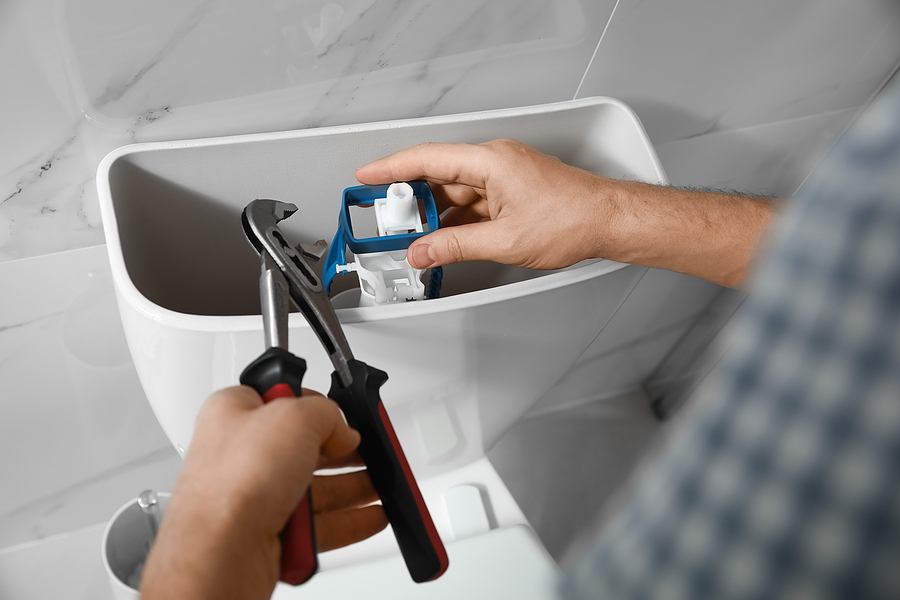
Shut off the water supply valve behind the toilet by turning it clockwise until it stops. Flush the toilet to empty the tank, then use a sponge to soak up any remaining water at the bottom. Unhook the chain from the flush handle arm and slide the old flapper off the two pegs on either side of the flush valve.
Wipe the valve seat clean with a rag. Any mineral crust or grit here will prevent the new flapper from sealing. Slide the new flapper onto the same two pegs, then reconnect the chain to the handle arm. Leave about half an inch of slack in the chain. If it’s too tight, the flapper won't close. If it’s too loose, the flush won't fully open the valve.
Turn the water supply back on and let the tank refill. Test the flush a few times, then run another dye test overnight to confirm the leak is gone. If dye still shows up in the bowl by morning, the flush valve seat is damaged, and it’s time to call a licensed plumber.
Sometimes the flapper and fill valve aren't the whole story. If your toilet is 15 or more years old, the plastic components inside the tank get brittle, and the flush valve seat develops pitting that no flapper can seal against. At that point, spot repairs stop working, and you'll chase leaks every few months.
A full flush assembly replacement includes the fill valve, flapper, flush valve, and overflow tube as one unit. Kits are pretty affordable, but installation requires draining the tank, unbolting it from the bowl, and swapping the gaskets underneath. A professional toilet repair service is the better option. Cracked tank bolts, warped gaskets, or a hairline crack in the porcelain can turn a simple swap into a flooded bathroom. Here are a few signs you've hit the end of the road with your current toilet:
Trust Rooter can help with phantom flushing, silent leaks, and toilet replacements. Call today to schedule a plumbing repair service and stop paying for water that runs while you sleep.
Trust Rooter is a professional plumbing company that has built a reputation for offering reliable residential and commercial plumbing services. From drain cleaning to water heater maintenance, garbage disposal repair, water leak repair, faucet repair, and sewer drain repair, Trust Rooter is your go-to plumbing company for all of your plumbing needs.
When South Florida gets hit with heavy rain, the effects aren't always limited to flooded streets and soggy yards. Saturated soil and already-high groundwater can put extra stress on underground plumbing, while damaged sewer…
 Read More
Does your home have a sewer smell that nobody can trace? A plumbing smoke test can quickly find where it starts. Trust Rooter is here to help. Sewer gas escapes through openings too…
Read More 
A row of broken urinals in a busy restroom invites customer complaints, health inspection problems, and high water bills. Waiting until something breaks could mean shutting down fixtures during peak hours. Trust Rooter recommends…
Read More