

954-707-6556
FREE ONSITE QUOTE!

4.9/ 5 Ratings based on 1698 reviews
GREAT SERVICE, GREAT REVIEWS!

Call This Tuesday to Get
$35 OFF
of any service
954-707-6556
4.9/ 5 Ratings based on 1698 reviews
Call This Tuesday to Get
of any service

 Oct 24,2026
A patch of soggy grass or an unpleasant smell in the yard might be your first clue that something is wrong with the sewer line. Underground leaks aren't always easy to spot, and the damage may spread before you realize what's happening. Trust Rooter helps homeowners track down sewer line problems and get the sewer repair they need. Calling a local plumber for a plumbing repair service when you first notice trouble could spare you from more extensive damage later. Here are five warning signs to watch for around your property.
A sprinkler leak or poor yard drainage may explain a patch of wet grass. If the rest of the lawn has dried after several rain-free days, though, it's time to consider an underground leak. Sewer damage is one possibility, especially when the moisture keeps returning to the same spot.
Wastewater from your home's plumbing travels through the main sewer line on its way to the municipal system or septic tank. A crack in that pipe or a loose joint gives the water somewhere to escape. Some leaks leave visible moisture on the lawn, while others soak into the surrounding soil without reaching the surface.
A wet patch along the path of your buried sewer line might point to a leak, especially if the ground feels soft when you walk across it. The type of soil makes a difference. Clay holds moisture near the surface, while sandy soil lets water seep farther underground.
Leave the digging to a professional until you know what's causing the problem. Buried electrical cables and other utility lines pose hazards, and soil contaminated with wastewater isn't safe to handle without precautions. A licensed plumber can locate the source and determine whether you need a plumbing repair service in Deerfield Beach, FL.
An unusually green section of lawn sometimes gets its extra moisture and nutrients from below. Sewer wastewater contains nitrogen and phosphorus, both of which support plant growth. If a buried pipe develops a leak, the grass above it might grow faster or appear healthier than the surrounding lawn.
During dry weather, a strip of grass above a leaking line may stay green while the rest of the yard begins to brown. Sometimes that growth follows the underground pipe closely enough to leave a visible band across the lawn.
Before suspecting a sewer leak, think about how that part of the lawn is watered and when you last applied fertilizer. Either could explain the extra growth. If the grass stays green without getting more water or fertilizer than the rest of the yard, there may be a leak underground.
A severe leak may have the opposite effect. When wastewater saturates the ground, grass roots lose access to oxygen. Instead of growing thicker, the affected area may turn yellow or die.
A sewage smell around the yard or foundation shouldn't be ignored, especially when it keeps returning. Hydrogen sulfide is one of the gases associated with sewage and is responsible for its familiar rotten-egg smell. However, the odor alone won't tell you exactly where the problem is.
Plumbing vents normally release sewer gases above the roof. If an underground sewer joint separates or a pipe cracks, those gases have another way out. They can move through the soil and become noticeable around the yard or foundation.
If you notice a sewage smell near an outdoor cleanout, the cap or one of its fittings may be loose or damaged. Pay attention to when the smell gets stronger, too. An odor that appears after someone flushes a toilet or runs the washing machine gives the plumber another clue about where the problem might be.
Don't remove the cleanout cap yourself, and avoid enclosed spaces where sewer gas could collect. Breathing high concentrations is dangerous. If the smell keeps coming back, have a qualified plumber check the connections and look for problems with the underground sewer line.
A new dip in the lawn is more concerning when it continues getting deeper. Water escaping from a damaged sewer line can carry fine soil particles away and gradually leave gaps underground. Without enough soil supporting it, the surface begins to sink.
The first visible change may be a shallow depression near a walkway or driveway. As more soil moves underground, the opening widens or deepens. The surface can look intact even when some of the supporting material beneath it has disappeared.
Keep children and pets away from a growing depression, especially one close to the foundation. Don't fill the opening until the cause has been checked. A fresh layer of soil won't restore support beneath an underground cavity.
If the sewer line is leaking, the damaged pipe section may need replacement. Repairs may also require excavation and compacted backfill where escaping water has removed soil from around the pipe.
Some sewer problems first become noticeable indoors. When the toilet, shower, and other drains start backing up around the same time, the trouble is less likely to be limited to a single fixture.
Watch what happens at the lowest drains in the house. Wastewater rising through a basement floor drain after an upstairs toilet flushes suggests a blockage farther along the drainage system. A washing machine discharging water may also cause bubbling in another fixture connected to the affected line.
If sewage starts coming back up through your drains, don't run any more water or flush the toilets. The blockage is already preventing wastewater from getting through, and using the plumbing will only send more water toward the backup.
Clearing out roots or debris might get things flowing again, but repeated backups could mean the pipe itself is damaged. A broken joint or a section that's shifted out of place may keep trapping waste. A plumber can inspect the sewer line to find out if it needs sewer repair in Jupiter, FL instead of another cleaning.
The next decision depends on what you're seeing. A single patch of green grass might justify checking your irrigation system first. Sewage backing up through a floor drain requires more immediate attention. Ground settlement near a buried sewer line also warrants prompt evaluation, as the soil may no longer support the overlying surface.
A sewer camera inspection provides a closer look at the pipe's interior. A technician inserts a waterproof camera through an accessible cleanout and examines the line for cracks, root intrusion, displaced joints, and other visible defects. Depending on the equipment and site conditions, locating equipment can help identify the damaged section from aboveground.
A camera inspection may show that cleaning is sufficient or reveal a section that needs replacement. Where the ground has settled, excavation may also be needed to check for erosion outside the pipe, which the camera can't show.
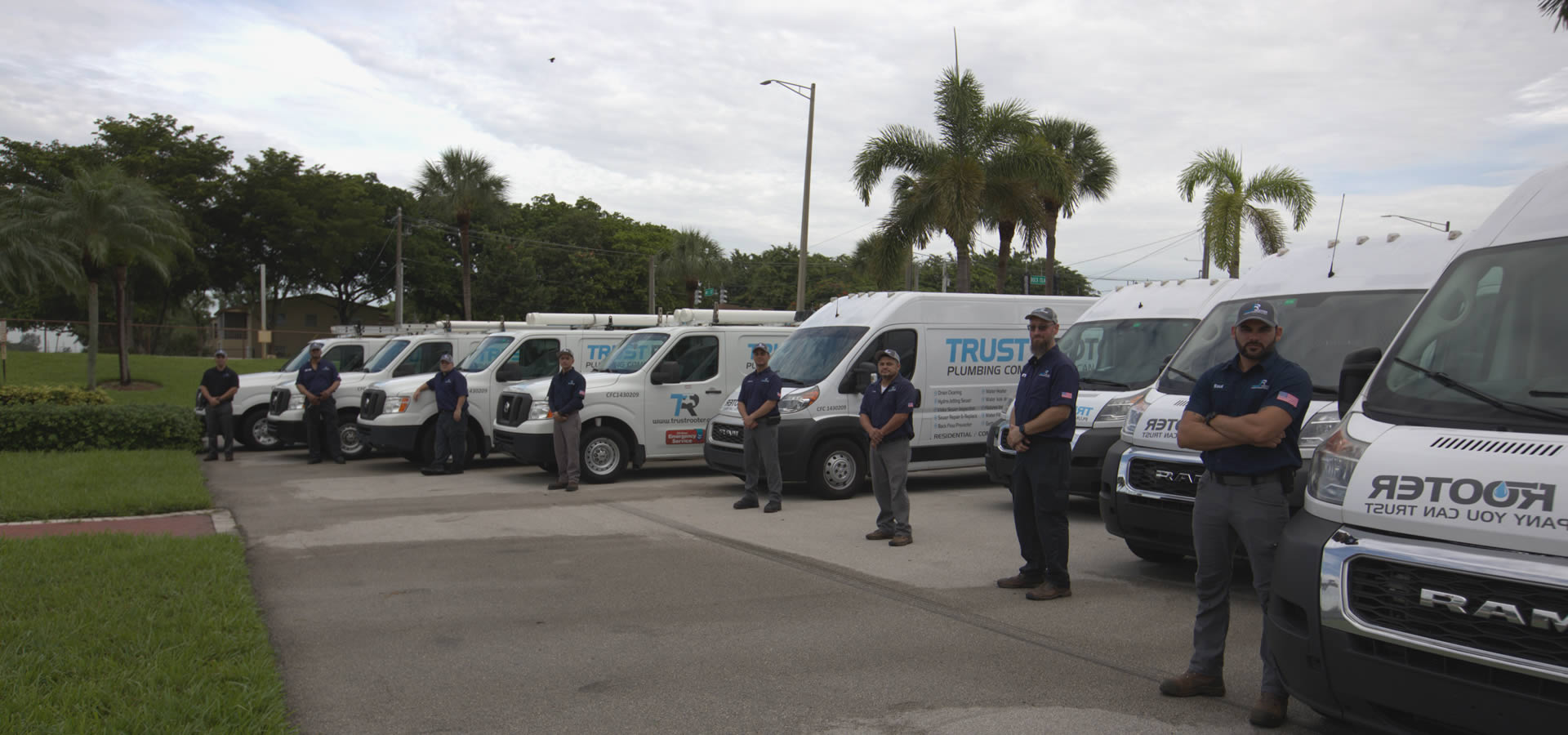
Trust Rooter helps homeowners find and fix problems with underground sewer lines. If you've noticed soggy areas in your yard, sewage odors, or drains that keep backing up, contact us to schedule an inspection. Our experienced plumbers can locate the problem, explain what's causing it, and recommend the sewer repair or plumbing repair service needed to get things working again.
Trust Rooter is a professional plumbing company that has built a reputation for offering reliable residential and commercial plumbing services. From drain cleaning to water heater maintenance, garbage disposal repair, water leak repair, faucet repair, and sewer drain repair, Trust Rooter is your go-to plumbing company for all of your plumbing needs.

Running a faucet until it gets hot wastes water, time, and resources. Homeowners with tankless water heaters want to know whether installing a hot water recirculating pump will solve this issue. The quick answer is yes…
 Read More

You're halfway through a hot shower when the water suddenly turns cold, then warms up again a few seconds later. This annoying temperature change is sometimes called the "cold water sandwich." It can happen when a…
Read More 
Digging up your yard to reach a damaged underground pipe could leave you with torn-up landscaping, damaged irrigation lines, and an expensive restoration project. The excavation method used for underground plumbing work makes a major difference…
Read More